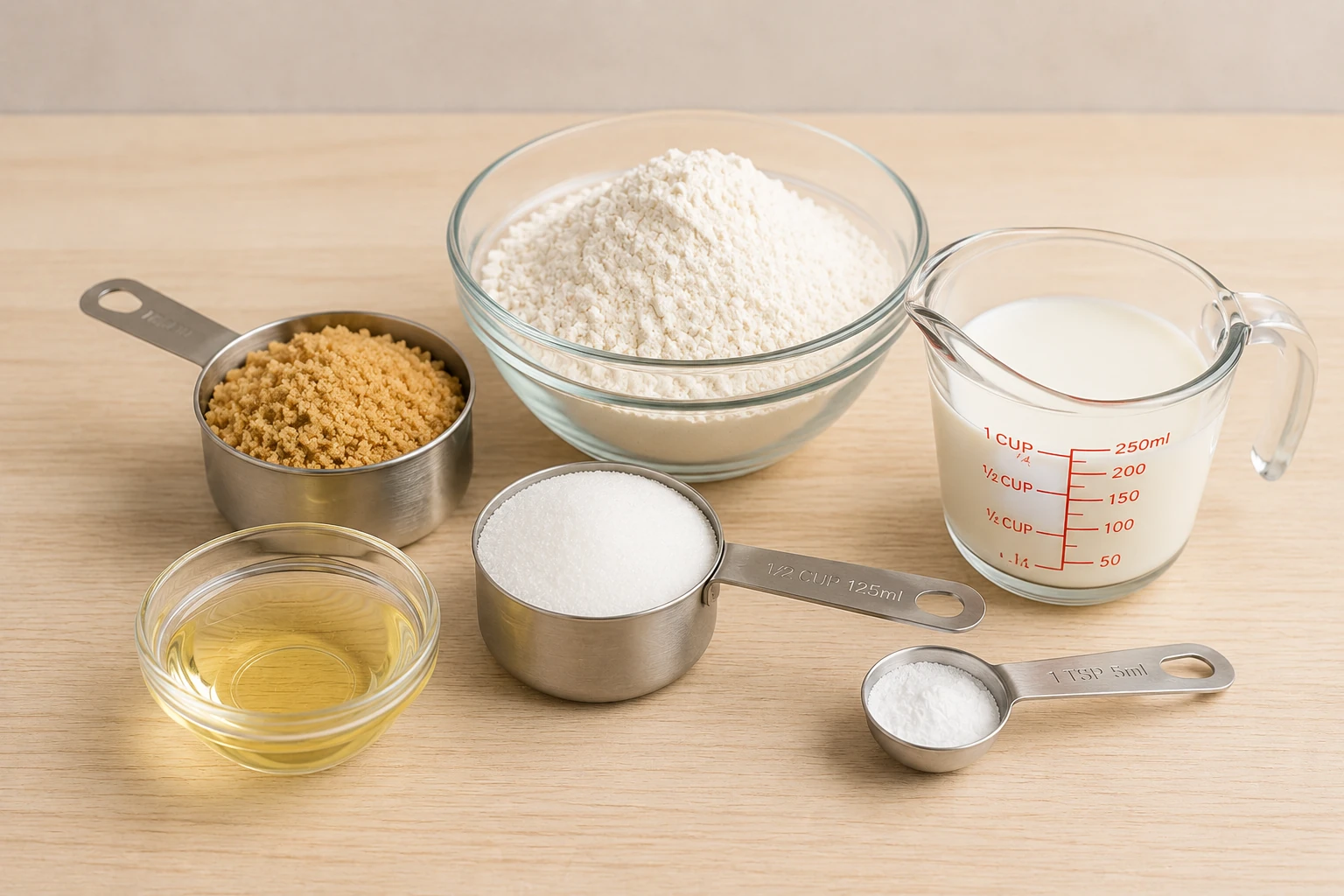
Learning how to measure baking ingredients correctly is one of the most important skills for beginners. Baking is different from regular cooking because small changes in ingredient amounts can affect the final result. Too much flour can make a cake dry, while too little flour can make cookies spread too much.
The good news is that measuring baking ingredients correctly is easy once you know a few simple rules. You do not need expensive equipment or professional baking skills. A basic kitchen scale, measuring cups, and measuring spoons are enough to get started.
In this guide, you will learn simple ways to measure flour, sugar, butter, liquids, and other common baking ingredients. These tips can help you make cakes, cookies, brownies, muffins, and other homemade desserts with more consistent results.
Why Measuring Ingredients Correctly Matters
Baking recipes depend on a balance between ingredients.
Flour provides structure, sugar adds sweetness and affects texture, butter adds richness, and liquids bring everything together. Changing the amount of one ingredient can change the whole recipe.
For example, adding too much flour can produce a heavy or dry cake. Too much liquid can make the batter thin. Too much baking soda or baking powder can affect the taste and cause baked goods to rise too quickly.
That is why accurate baking measurements are so important.
When you measure ingredients carefully, you are more likely to get the same delicious result each time you make a recipe.
1. Use a Kitchen Scale for the Most Accurate Results
The most accurate way to measure baking ingredients is with a digital kitchen scale.
A scale measures ingredients by weight instead of volume. This is useful because a cup of flour can weigh different amounts depending on how tightly the flour is packed.
To use a kitchen scale, place your bowl on the scale and press the tare or zero button.
Add the ingredient until the display reaches the amount listed in your recipe.
For example, if a recipe says 200 grams of flour, add flour until the scale shows 200 grams.
A kitchen scale is especially helpful when making bread, cakes, pastries, and other recipes where precise measurements matter.
2. Understand Dry Measuring Cups
Dry measuring cups are designed for ingredients such as:
- Flour
- Granulated sugar
- Brown sugar
- Oats
- Cocoa powder
- Shredded coconut
These cups usually come in different sizes, such as 1 cup, 1/2 cup, 1/3 cup, and 1/4 cup.
When measuring dry ingredients, fill the cup according to the recipe instructions and level the top with a straight edge.
Do not shake the cup excessively because this can cause the ingredient to settle and change the amount.
3. Measure Flour the Right Way
Flour is one of the most important ingredients to measure correctly.
If you are not using a kitchen scale, the spoon-and-level method is a simple option.
First, use a spoon to lightly place flour into a dry measuring cup.
Do not scoop the flour directly from the bag with the measuring cup because this can pack the flour down and give you too much.
Once the cup is full, use the flat edge of a knife to level the flour.
Do not press the flour down.
This simple method can help prevent adding too much flour to your recipe.
4. Do Not Pack Flour Unless the Recipe Says So
Flour should generally be light and loose when measured.
Packing flour into a cup can add significantly more flour than intended.
This is one reason some cakes and cookies turn out dry or heavy.
Brown sugar is different. Many recipes specifically instruct you to pack brown sugar into the measuring cup.
Always check the wording of the recipe before measuring.
5. How to Measure Brown Sugar
Brown sugar usually needs to be packed into a dry measuring cup.
Add the brown sugar to the cup and press it down gently with your fingers or the back of a spoon.
Continue adding and pressing until the cup is full.
When you turn the packed brown sugar out, it should hold the shape of the measuring cup.
If your recipe says “packed brown sugar,” this step is important.
6. Measure Granulated Sugar Correctly
White granulated sugar is easier to measure than flour.
Spoon or pour the sugar into a dry measuring cup and level the top with a straight edge.
Unlike flour, you generally do not need to worry about gently filling the cup to prevent packing.
Still, avoid shaking the cup excessively because settled ingredients can change the measurement.
7. Use Liquid Measuring Cups for Liquids
Liquid ingredients should be measured differently from dry ingredients.
Use a clear liquid measuring cup with a spout for ingredients such as:
- Milk
- Water
- Oil
- Cream
- Melted butter
- Juice
Place the measuring cup on a flat surface.
Pour in the liquid and check the measurement at eye level.
Looking from above can make it difficult to see the exact level.
For the best accuracy, your eyes should be level with the measurement line.
8. Measure Small Ingredients With Measuring Spoons
Ingredients such as baking powder, baking soda, salt, vanilla extract, and spices are usually measured with measuring spoons.
Use the correct spoon size listed in the recipe.
For example, 1 teaspoon and 1 tablespoon are not the same measurement.
Fill the spoon and level it when the recipe calls for a level teaspoon or tablespoon.
Avoid using ordinary eating spoons because their sizes can vary.
A proper set of measuring spoons gives you much more consistent results.
9. Measure Butter Carefully
Butter can be measured in several ways.
Many butter packages have measurement markings on the wrapper. These markings make it easy to cut the amount needed.
You can also use a kitchen scale.
If a recipe calls for melted butter, melt the butter first unless the recipe specifically says to measure it before melting.
If the recipe calls for softened butter, do not completely melt it.
Softened butter should be easy to press with your finger but should still hold its shape.
Using the wrong butter consistency can affect cakes and cookies.
10. Be Careful With Sticky Ingredients
Ingredients such as honey, maple syrup, molasses, and peanut butter can be difficult to measure because they stick to measuring cups.
A simple trick is to lightly coat the measuring cup or spoon with a little cooking oil before adding the sticky ingredient.
The ingredient will slide out more easily.
You can also use a kitchen scale to measure sticky ingredients directly into your mixing bowl.
This method can save time and reduce mess.
Common Measuring Mistakes to Avoid
Knowing what not to do is just as important as knowing the correct method.
Scooping Flour Directly From the Bag
This can compress the flour and result in too much being added.
Use the spoon-and-level method or a kitchen scale instead.
Using the Wrong Measuring Cup
Do not use a dry measuring cup for liquids when accurate measurement is important.
Use a liquid measuring cup for milk, water, oil, and other liquid ingredients.
Guessing Measurements
Avoid estimating ingredients such as baking powder, baking soda, or flour.
Even a small difference can affect the final result.
Using Eating Spoons
Regular kitchen spoons are not standardized.
Use proper measuring spoons for small quantities.
Ignoring Recipe Instructions
Words such as “packed,” “level,” “melted,” and “softened” are important.
Read the instructions carefully before measuring.
Measuring Ingredients by Weight vs. Volume
You may notice that some recipes use grams while others use cups.
Weight measurements are generally more consistent because they tell you exactly how much of an ingredient you need.
Volume measurements can vary depending on how an ingredient is placed in the cup.
For beginner bakers, using cups and spoons is completely fine when the recipe provides those measurements.
However, if you bake frequently, measure baking ingredients, investing in a digital kitchen scale can make your baking more accurate and consistent.
How to Make Measuring Easier
A little preparation can make baking much easier.
Before you begin, gather all your ingredients and measuring tools.
Read the recipe carefully.
If you are using a kitchen scale, place your mixing bowl on the scale and use the tare button between ingredients.
This allows you to add several ingredients directly to the same bowl without using multiple measuring cups.
Keep your measuring cups and spoons clean and dry when measuring ingredients.
Taking a few extra minutes to prepare can prevent mistakes later.
Frequently Asked Questions
Is a Kitchen Scale Necessary for Baking?
No. You can successfully bake using measuring cups and spoons. However, a kitchen scale provides more consistent measurements and is especially useful for recipes that list ingredients by weight.
Should I Sift Flour Before Measuring?
If the recipe specifically says to sift the flour, follow those instructions. Otherwise, use the measuring method provided by the recipe.
Should Flour Be Packed Into a Measuring Cup?
Usually, no. Flour should generally be lightly spooned into a dry measuring cup and leveled with a straight edge.
Why Does My Cake Turn Out Dry?
Too much flour is one possible reason. Measuring flour incorrectly can add more than the recipe requires. Overbaking can also make a cake dry.
How Do I Measure Sticky Ingredients?
You can lightly coat the measuring cup with oil so the ingredient slides out more easily. A kitchen scale is another convenient option.
Final Thoughts
Knowing how to measure baking ingredients correctly can make a big difference in your baking results. Accurate measurements help create the right balance between flour, sugar, butter, liquids, and other ingredients.
For the best results, use a kitchen scale when possible. If you use measuring cups, learn the spoon-and-level method for flour and other light dry ingredients. measure baking ingredients, Use liquid measuring cups for liquids and measuring spoons for small ingredients.
Most importantly, always read your recipe carefully. Instructions such as “packed,” “level,” “softened,” and “melted” can change how an ingredient should be measured.
With these simple habits, you can become a more confident home baker and make cakes, cookies, muffins, and desserts with better and more consistent results.
Happy baking from Bake With Sunny!
Easy Vanilla Cake Recipe for Beginners | Bake With Sunny
How do you handle and store eggs safely?