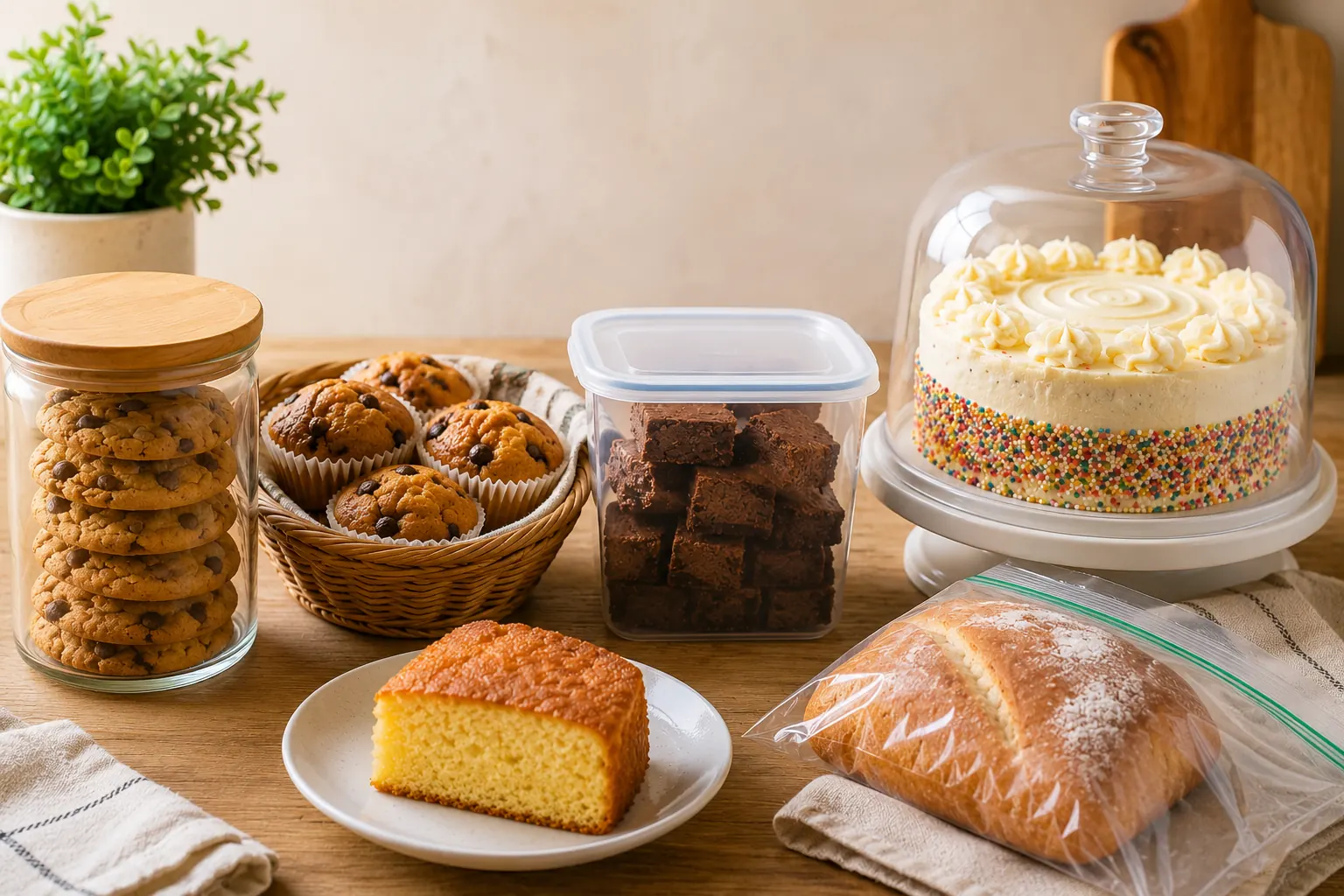
How to Store Homemade Baked Goods. There is nothing quite like the smell of freshly baked cookies, cake, muffins, or brownies coming from the kitchen. But after spending time baking, you want those treats to stay fresh for as long as possible.
I have learned that storing baked goods properly can make a bigger difference than you might expect. A cake that is left uncovered can become dry, while cookies can lose their lovely texture if they are stored the wrong way. Some desserts are perfectly happy on the kitchen counter, while others need to go into the refrigerator.
The good news is that how to store homemade baked goods is not complicated. With a few simple habits, you can keep your favorite homemade treats soft, fresh, and delicious.
Let Everything Cool Before Storing
This is one of the easiest mistakes to make.
When a cake or batch of cookies comes out of the oven, it can be tempting to put everything straight into a container. Try to resist that temptation.
Freshly baked food needs time to cool. If you seal warm baked goods inside a container, the trapped steam can create condensation. That extra moisture can make cookies soft or leave the tops of cakes sticky.
I usually place cakes, muffins, and cookies on a cooling rack and give them plenty of time to cool completely.
Once they are cool to the touch, they are ready to store.
Store Cookies in an Airtight Container
Cookies are probably one of the easiest baked treats to store.
Once your cookies have cooled completely, place them in an airtight container. This helps protect them from air and moisture.
For soft cookies, a tightly sealed container helps keep them tender. Crispy cookies need protection from moisture so they can keep their crunch.
I also recommend keeping different types of cookies separate. If you put soft cookies and crispy cookies in the same container, the textures can change.
Cookies with strong flavors, such as peppermint or heavily spiced cookies, are also better stored separately so their flavors do not mix.
Keep Homemade Cakes Covered
A homemade cake can lose moisture surprisingly quickly when it is left uncovered.
If you have made a simple unfrosted cake, cover it well with plastic wrap or place it inside an airtight cake container once it has completely cooled.
For frosted cakes, a cake carrier is especially useful. It protects the frosting and keeps air away from the cake.
If you have already cut the cake, pay extra attention to the cut side. That exposed area can dry out quickly. Cover it well before storing.
Of course, cakes with cream, custard, cream cheese, or certain fresh fillings may need refrigeration. Always consider the ingredients in the recipe.
The Best Way to Store Cupcakes
Cupcakes are easy to store, but frosting can make things a little tricky.
Let your cupcakes cool completely before putting them into a container. If they are frosted, use a container with enough height so the lid does not touch the frosting.
There is nothing more disappointing than opening the container and finding that your beautiful frosting is stuck to the lid.
For longer storage, many cupcakes can be frozen. I often find it easier to freeze plain cupcakes and add fresh frosting after they have thawed.
Keep Muffins Soft and Fresh
Homemade muffins are best when they are soft inside with a slightly golden top.
After baking, let them cool completely before storing them.
An airtight container or resealable food bag works well for short-term storage. You can also place a paper towel underneath the muffins and another one on top. The paper towel can help manage extra moisture inside the container.
If your muffins contain fresh fruit, cream, or another ingredient that needs refrigeration, follow the recipe’s storage instructions.
Store Brownies in a Sealed Container
If you love fudgy brownies, proper storage is important.
Once the brownies have cooled, place them in an airtight container. You can leave them whole or cut them into squares first.
If you are stacking them, place parchment paper between the layers so they do not stick together.
Keeping brownies covered helps prevent the edges from becoming dry.
For me, one of the best things about brownies is that they often taste just as good the next day when they have been stored properly.
What About Homemade Bread?
Fresh homemade bread is a little different from cakes and cookies.
For short-term storage, bread is usually best kept at room temperature. Let the loaf cool completely first, then place it in a suitable bread bag or container.
Try not to refrigerate homemade bread unless the recipe specifically requires it. The refrigerator can cause bread to lose its fresh texture more quickly.
If you have made a large loaf and know you will not finish it within a few days, freezing is a better option.
Freezing Is Great for Longer Storage
Sometimes you bake more than your family can eat in a few days. That is where the freezer becomes very useful.
Many baked goods, including cookies, muffins, brownies, cakes, and some breads, can be frozen.
The important thing is to protect them properly.
Let the baked goods cool completely first. Wrap them tightly in freezer-safe wrapping and then place them in a freezer-safe bag or container.
Try to remove excess air before sealing the container.
I also recommend writing the name and date on the container. When your freezer is full of homemade treats, it is much easier to know what you have when everything is labeled.
Should You Refrigerate Baked Goods?
This is a common question, and the answer depends on the recipe.
Not every cake, cookie, or muffin needs to be refrigerated.
In fact, some baked goods can become firmer or drier in the refrigerator.
However, desserts containing ingredients such as cream, custard, cream cheese, or certain fresh fillings may need to be refrigerated for food safety.
Always check the recipe and consider the ingredients before deciding where to store your dessert.
Keep Baked Goods Away From Strong Smells
Have you ever opened the refrigerator and noticed that a cake smells like another food?
Baked goods can absorb strong odors, especially when they are not properly covered.
This is another reason airtight containers are so useful.
If you are storing desserts in the refrigerator, make sure they are sealed well and kept away from foods with strong aromas.
You want your chocolate cake to taste like chocolate cake, not last night’s dinner.
Keep Different Textures Separate
This small tip can save your cookies and other treats.
Soft baked goods and crispy baked goods should generally not be stored together.
A soft cookie can release moisture into the container, which may cause a crispy cookie to lose its crunch.
The same idea applies to strongly flavored desserts.
Keeping similar baked goods together helps each one maintain its original texture and flavor.
Do Not Store Baked Goods While They Are Still Warm
I know I already mentioned cooling, but this point is worth repeating.
When you bake several things at once, it is easy to get impatient and start packing them away while they are still warm. How to Store Homemade Baked Goods.
This can create moisture inside the container.
Instead, give your baked goods enough time to cool naturally.
A little patience at this stage can help prevent soggy surfaces and unwanted condensation.
Check Baked Goods Before Eating
Before serving something that has been stored for a while, take a quick look and smell it.
If you notice anything unusual, such as visible spoilage, an unpleasant smell, or an unexpected texture, it is better not to eat it.
Be particularly careful with desserts containing dairy, eggs, fresh fruit, cream, or other perishable ingredients.
Storage time can vary depending on the recipe, ingredients, and storage conditions.
Simple Storage Guide
Here is a quick way to remember the basics:
Cookies: Store cooled cookies in an airtight container.
Cake: Keep covered or in an airtight cake container.
Cupcakes: Store in a covered container that protects the frosting.
Muffins: Keep in an airtight container after they have cooled.
Brownies: Store in a sealed container with parchment between layers if needed.
Bread: Keep at room temperature for short-term storage or freeze for longer storage.
Cream-filled desserts: Usually require refrigeration.
Always follow the specific recipe instructions when they are available.
How to Keep Cake From Drying Out
If you have ever baked a beautiful cake only to find it dry the next day, proper storage can help.
First, make sure you do not overbake the cake. Then allow it to cool completely before covering it.
Wrap the cake well or keep it in an airtight container.
If you have already sliced it, cover the exposed cut surface carefully.
For layer cakes, frosting and fillings can also help protect the cake from losing moisture.
Final Thoughts
Learning how to store homemade baked goods properly is a simple skill that can help you enjoy your baking for longer.
The main thing to remember is to protect baked goods from too much air and moisture. Let them cool completely before storing, use airtight containers when appropriate, and keep desserts that contain perishable ingredients refrigerated.
For treats you cannot finish quickly, freezing is a great option. Cookies, muffins, brownies, cakes, and many types of bread can be frozen when wrapped and stored properly.
Most importantly, pay attention to the ingredients in each recipe. A simple batch of cookies and a cream-filled cake will naturally have different storage needs. How to Store Homemade Baked Goods.
With a little care, you can keep your homemade treats tasting fresh and delicious instead of letting them become dry or stale.
Happy baking from Bake With Sunny!
Easy Vanilla Cake Recipe for Beginners | Bake With Sunny
How do you handle and store eggs safely?