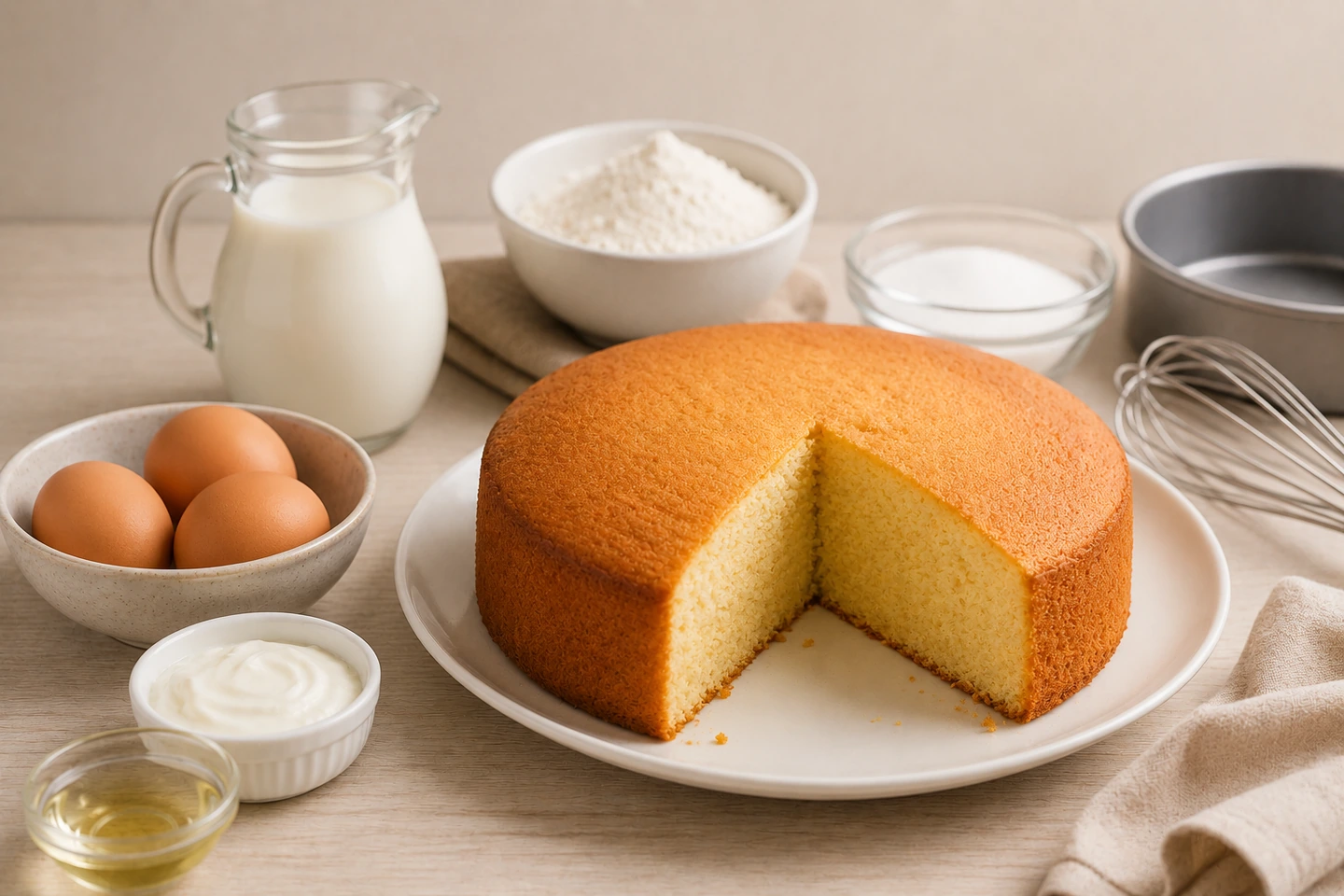
There is nothing better than a homemade cake that is soft, moist, and full of flavor. A good cake should feel light when you take a bite, with a tender texture that does not become dry or crumbly. If your homemade cakes sometimes turn out dry, hard, or too dense, do not worry. cakes moist and soft , A few simple changes can make a big difference.
Learning how to make cakes moist and soft is easier than it may seem. The key is to use the right ingredients, measure them carefully, mix the batter correctly, and avoid overbaking.
In this guide, you will learn simple and practical tips that can help you make soft and moist cakes at home. These tips are useful for beginners and can be applied to vanilla cakes, chocolate cakes, carrot cakes, cupcakes, and many other desserts.
Why Does Cake Become Dry?
Before learning how to make a cake moist, it helps to understand why cakes become dry.
The most common reason is overbaking. Even a few extra minutes in the oven can remove too much moisture from a cake.
Using too much flour is another common problem. Flour absorbs liquid, so adding more than the recipe requires can make the cake heavy and dry.
Other causes include using too little fat or liquid, mixing the batter incorrectly, or storing the cake without proper covering.
The good news is that these problems are easy to avoid once you know what to look for.
1. Measure Flour Correctly
One of the most important tips for a moist and soft cake is measuring flour correctly.
Too much flour can quickly make your cake dry.
If you are using measuring cups, avoid scooping flour directly from the bag. This can pack the flour into the cup and give you more flour than you need.
Instead, lightly spoon the flour into a dry measuring cup and level the top with a knife.
For even more accurate results, use a digital kitchen scale and measure the flour by weight.
Accurate measurements help keep the right balance between flour and liquid.
2. Do Not Overbake the Cake
Overbaking is one of the biggest reasons cakes become dry.
Every oven is slightly different, so the baking time in a recipe should be treated as a guide.
Start checking your cake a few minutes before the minimum recommended baking time.
Insert a toothpick into the center. If it comes out clean or with a few moist crumbs, the cake is usually ready.
Do not wait until the toothpick is completely dry if the recipe indicates that a few moist crumbs are okay.
Remember that the cake continues cooking slightly from the remaining heat after it comes out of the oven.
3. Use Enough Fat
Butter and oil help give cakes a soft and tender texture.
Fat coats some of the flour and helps reduce excessive gluten development.
Butter adds a rich flavor, while oil can create an especially moist texture.
Some cake recipes use both.
If you are following a recipe, use the amount of fat listed rather than reducing it too much.
Reducing butter or oil without adjusting the other ingredients can change the texture of the finished cake.
4. Add the Right Amount of Liquid
Milk, buttermilk, yogurt, sour cream, and other liquids help keep cake batter moist.
The amount of liquid needs to be balanced with the flour and other dry ingredients.
If a recipe calls for milk, measure it accurately rather than guessing.
Buttermilk and yogurt can be especially helpful when making soft cakes because they add moisture and can create a tender texture.
Do not add extra liquid without understanding the recipe, though. Too much liquid can make the batter heavy or prevent the cake from setting properly.
5. Try Buttermilk or Yogurt
Buttermilk is a popular ingredient in many soft cake recipes.
It adds moisture and a slight tangy flavor.
Plain yogurt can also work well in some recipes. It adds moisture and can help create a tender crumb.
Sour cream is another option commonly used in rich cakes.
If you are adapting a recipe, make sure the substitution is appropriate because changing ingredients can affect the balance of the batter.
6. Use Room-Temperature Ingredients
Many cake recipes work best when ingredients such as eggs, butter, and milk are at room temperature.
Room-temperature ingredients can combine more evenly and create a smoother batter.
Cold ingredients can sometimes cause softened butter to become firm again when mixed.
For best results, check your recipe before starting and take refrigerated ingredients out ahead of time if needed.
Do not melt butter unless the recipe specifically calls for melted butter.
Softened and melted butter can produce very different cake textures.
7. Do Not Overmix the Batter
Once flour is added, avoid mixing the batter more than necessary.
Overmixing can develop too much gluten, which may make the cake dense or chewy instead of soft.
Mix until the ingredients are just combined.
If you are adding dry ingredients gradually, use a low mixer speed or gently fold them in with a spatula.
A few small lumps may be acceptable depending on the recipe.
The goal is a smooth batter without excessive mixing.
8. Cream Butter and Sugar Properly
For many traditional cake recipes, butter and sugar are mixed together before adding the other ingredients.
This process is called creaming.
When butter and sugar are beaten together properly, air is incorporated into the mixture. This can help the cake become lighter.
Use softened butter, not cold or melted butter, when the recipe calls for creaming.
Beat the butter and sugar until the mixture looks lighter and creamy.
However, avoid following a specific timing rule blindly. The appearance and texture of the mixture are more important than the exact number of minutes.
9. Use Fresh Baking Powder and Baking Soda
Baking powder and baking soda help cakes rise.
If these ingredients are old or have lost their effectiveness, the cake may not rise properly and can become dense.
Check the freshness of your baking ingredients regularly.
Store them in a cool, dry place with the containers tightly closed.
Do not add extra baking powder or baking soda to make your cake rise more. Too much can create a bitter or unpleasant flavor and may cause the cake to rise and then collapse.
10. Do Not Open the Oven Too Early
Opening the oven door too early can cause the temperature to drop.
A cake that is still rising can be affected by this sudden change.
Try to keep the oven door closed until the cake is close to being finished.
Use the oven light to check the cake if your oven has one.
When you are ready to test it, quickly open the door and insert a toothpick into the center.
11. Choose the Correct Baking Pan
The size and material of your baking pan can affect how your cake cooks.
Using a pan that is too small can make the batter deeper and increase the baking time.
A pan that is too large can create a thinner cake that cooks faster.
Always use the pan size recommended by the recipe when possible.
Also prepare the pan properly with butter, cooking spray, or parchment paper according to the recipe.
12. Add Simple Moisture After Baking
Sometimes you can add extra moisture after the cake has baked.
A simple syrup is one popular option.
To make it, gently heat equal amounts of sugar and water until the sugar dissolves. Let it cool slightly, then brush or lightly spoon the syrup over the cake.
This works particularly well for layer cakes.
You can also use flavored syrup, such as vanilla or lemon, depending on the cake.
Be careful not to add too much. You want the cake moist, not wet.
13. Store Cake Properly
Even a perfectly baked cake can become dry if it is stored incorrectly.
Once the cake has cooled completely, keep it covered in an airtight container.
If you have a sliced cake, cover the cut side carefully because exposed cake loses moisture quickly.
For cakes with frosting, follow the storage instructions for the specific frosting and ingredients.
Proper storage helps your cake stay soft for longer.
What to Do If Your Cake Is Already Dry
If your cake has already turned out dry, you may still be able to improve it.
One simple option is to brush it lightly with simple syrup.
You can also serve it with whipped cream, ice cream, fruit, or a creamy frosting.
For a layer cake, adding a moist filling between the layers can also help.
However, prevention is usually easier than fixing a dry cake, so focus on accurate measurements and proper baking time next time.
Frequently Asked Questions
What Makes a Cake Soft and Moist?
A good balance of flour, fat, sugar, eggs, and liquid helps create a soft cake. Ingredients such as oil, buttermilk, yogurt, and sour cream can also contribute to a moist texture.
Why Is My Homemade Cake Dry?
Overbaking and using too much flour are two common reasons. Incorrect measurements, too little fat, and improper storage can also cause dryness.
Is Oil Better Than Butter for Moist Cake?
Oil can make cakes especially moist because it remains liquid at room temperature. Butter provides a rich flavor and can also create a tender cake when used correctly.
Can I Add More Milk to Make Cake Moist?
Not usually. Adding extra milk can upset the balance of the recipe and make the cake too wet or dense. It is better to follow a tested recipe with the correct ingredient ratios.
Does Yogurt Make Cake Moist?
Yes. Yogurt can add moisture and create a tender texture in many cake recipes. Use the amount specified by the recipe for the best results.
Final Thoughts
Knowing how to make cakes moist and soft does not require complicated baking techniques. The most important steps are simple: measure flour correctly, use fresh ingredients, choose the right amount of fat and liquid, avoid overmixing, and do not overbake.
Room-temperature ingredients, buttermilk or yogurt, cakes moist and soft , and proper storage can also help you achieve a tender texture.
Most importantly, pay attention to your cake while it is baking. Every oven is different, so learning when your cake is actually done is an important baking skill.
With a little practice, you can make homemade cakes that are soft, moist, and delicious every time.
Happy baking from Bake With Sunny!
Easy Vanilla Cake Recipe for Beginners | Bake With Sunny
How do you handle and store eggs safely?