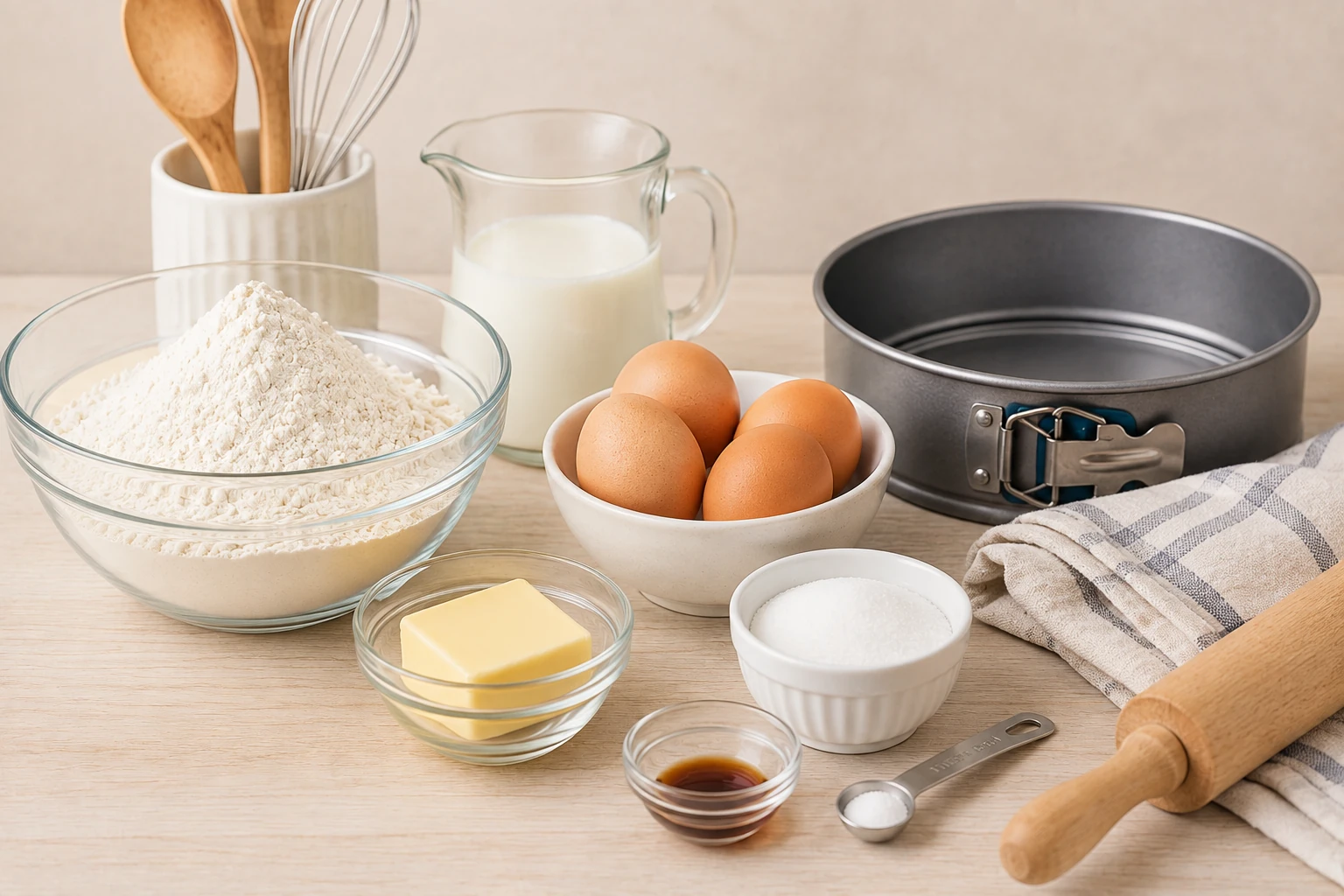
If you want your cakes, cookies, muffins, and other desserts to turn out better every time, learning a few essential baking tips can make a big difference. Baking does not have to be difficult, but it does require attention to measurements, ingredients, temperature, mixing, and baking time.
Sometimes a recipe can look simple, yet the final result may be dry, essential baking tips, dense, burnt, or uneven. In most cases, the problem comes from a small mistake that can easily be avoided.
Whether you are a beginner or already enjoy baking at home, essential baking tips, these simple tips can help you become more confident and get more consistent results.
Why Good Baking Habits Matter
Baking is based on balance. Every ingredient has a purpose.
Flour gives structure, eggs help bind ingredients, sugar adds sweetness and affects texture, butter adds richness, and baking powder or baking soda helps baked goods rise.
If you change the amount of one ingredient, the final result can change too.
That is why good baking habits are important. Measuring carefully, preparing ingredients properly, and following the recipe in the correct order can help you avoid many common baking problems.
1. Always Read the Recipe First
Before you start baking, read the entire recipe from beginning to end.
Check all the ingredients and make sure you have everything you need.
Pay attention to instructions such as:
- Bring butter to room temperature
- Chill the dough
- Preheat the oven
- Melt the butter
- Let the cake cool
- Prepare the baking pan
Some recipes also need resting or chilling time, so reading ahead can prevent surprises.
Taking a few minutes to understand the recipe can make the whole baking process easier.
2. Measure Ingredients Accurately
Accurate measurements are one of the most important baking tips for perfect results.
Too much flour can make a cake dry and heavy. essential baking tips. Too little flour can make cookies spread too much.
A digital kitchen scale is the most accurate option because ingredients are measured by weight.
If you use measuring cups, use the correct method.
For flour, gently spoon it into a dry measuring cup and level the top with a knife. Avoid scooping flour directly from the bag because it can pack the flour into the cup.
Use measuring spoons for small amounts of ingredients such as baking soda, baking powder, salt, and spices.
3. Use Fresh Baking Ingredients
Fresh ingredients can make a noticeable difference in baking.
Check the freshness of baking powder, baking soda, flour, and other ingredients before starting a recipe.
Old baking powder or baking soda may not work properly, which can result in cakes and muffins that do not rise well.
Store dry ingredients in clean, airtight containers in a cool and dry place.
Also check nuts, seeds, and other ingredients that can become stale over time.
Fresh ingredients help give your baked goods better flavor and texture.
4. Use Ingredients at the Correct Temperature
Many recipes work best when certain ingredients are at room temperature.
Room-temperature eggs, butter, and milk can combine more easily and help create a smooth batter.
If a recipe calls for softened butter, do not completely melt it.
Softened butter should be easy to press but should still hold its shape.
However, some recipes specifically require cold butter, especially certain pastry and biscuit recipes.
Always follow the temperature instructions in the recipe.
5. Preheat Your Oven
Never put your cake or cookies into an oven that has not reached the required temperature unless the recipe specifically tells you to use a cold oven.
Preheating gives the baked goods the correct environment from the beginning.
An oven that is too cold can affect rising, texture, and baking time.
An oven that is too hot can cause the outside to brown too quickly while the center remains undercooked.
If you bake regularly, an oven thermometer can help you check whether your oven temperature is accurate.
6. Prepare Your Baking Pan Properly
The right baking pan can make a big difference.
Before adding your batter or dough, prepare the pan according to the recipe.
You may need to:
- Grease the pan
- Use parchment paper
- Dust with flour
- Line a baking sheet
- Use cupcake liners
Using the correct pan size is also important.
If you use a smaller pan than the recipe requires, the batter may be deeper and take longer to bake.
If the pan is too large, the batter may spread too thin and bake too quickly.
7. Do Not Overmix the Batter
Overmixing is a common reason cakes and muffins become dense.
Once flour is added, mix only until the ingredients are combined.
Too much mixing can develop gluten, which can make some baked goods tough instead of soft.
For many cake recipes, use a gentle mixing speed after adding the dry ingredients.
If the recipe says to fold ingredients, use a spatula and gently turn the mixture until everything is incorporated.
8. Follow the Correct Ingredient Order
The order in which ingredients are added can affect the final texture.
For example, many cake recipes begin by creaming butter and sugar together. Eggs may then be added before the dry ingredients and milk.
Other recipes use a different method.
Do not assume that all ingredients can be added at once.
Follow the recipe steps carefully, especially when making cakes, pastries, or recipes that use yeast.
The method is part of the recipe.
9. Avoid Opening the Oven Too Often
It can be tempting to open the oven door and check your cake every few minutes.
Try to avoid doing this.
Opening the oven door allows heat to escape and can lower the temperature.
This is especially important for cakes and other baked goods that are still rising.
Use the oven light if possible.
When the baking time is nearly finished, check the food quickly using the method recommended by the recipe.
For cakes, a toothpick inserted into the center should usually come out clean or with a few moist crumbs.
10. Learn How to Check for Doneness
Do not rely only on the exact baking time listed in a recipe.
Ovens, pans, and even ingredient temperatures can vary.
Learn how to recognize when your baked goods are ready.
For cakes, look for a set center and lightly golden edges. A toothpick inserted into the middle should come out clean or with a few moist crumbs.
Cookies may look slightly soft when they first come out of the oven. They usually become firmer as they cool.
Muffins should look set and lightly golden on top.
With practice, you will become better at judging doneness by appearance and texture.
11. Do Not Overbake
Overbaking is one of the easiest ways to ruin an otherwise good dessert.
A cake can become dry, cookies can become hard, and muffins can lose their soft texture.
Start checking your baked goods near the lower end of the recommended baking time.
Remember that food continues to cook slightly from residual heat after coming out of the oven.
Removing a cake at the right time can help keep it moist and tender.
12. Let Baked Goods Cool Properly
Cooling is an important part of baking.
A freshly baked cake can be fragile and may break if you remove it from the pan too quickly.
Follow the recipe instructions for cooling.
Some cakes should cool in the pan for several minutes before being transferred to a cooling rack.
Cookies can also benefit from a few minutes on the baking sheet before moving them.
Proper cooling helps baked goods finish setting and makes them easier to decorate and serve.
13. Do Not Make Too Many Changes at Once
Once you become comfortable with baking, experimenting can be fun.
However, avoid changing several ingredients at the same time.
For example, if you replace the flour, sugar, butter, and milk all at once, it can be difficult to know why the recipe did not work.
Start with small changes.
You can add chocolate chips, cinnamon, nuts, fruit, or a different topping without completely changing the recipe.
As you learn how ingredients work together, you can experiment more confidently.
14. Store Baked Goods Properly
Good baking does not end when the dessert comes out of the oven.
Proper storage helps maintain texture and flavor.
Once baked goods have cooled completely, store them according to the recipe.
Cookies are usually best kept in an airtight container.
Cakes can be covered with a cake container or plastic wrap.
Some desserts need refrigeration because they contain cream, fresh fruit, cream cheese, or other perishable ingredients.
Keeping baked goods covered also helps prevent them from drying out.
15. Keep Practicing
The most important baking tip is to practice.
You may not get perfect results every time, especially when learning.
If a cake sinks, cookies spread, or bread does not rise, try to understand what happened.
Think about the measurements, oven temperature, mixing method, and baking time.
Write down useful notes when you try a recipe again.
Over time, you will learn how different ingredients behave and become more confident in making adjustments.
Common Baking Problems and Quick Solutions
Dry Cake
Possible causes include too much flour, too little liquid, or overbaking.
Measure flour carefully and check the cake before the full baking time is complete.
Dense Cake
Overmixing, old leavening agents, or incorrect ingredient measurements can cause a dense cake.
Mix gently after adding flour and make sure your baking powder or baking soda is fresh.
Cookies Spread Too Much
Soft or melted butter can cause cookies to spread.
Follow the recipe’s butter instructions and chill the dough if the recipe recommends it.
Cookies Are Too Hard
Overbaking is a common cause.
Remove cookies when the edges are set and the centers still look slightly soft if the recipe recommends this texture.
Final Thoughts
These essential baking tips can help you achieve better results every time you bake. Accurate measurements, fresh ingredients, correct temperatures, proper mixing, and careful baking times all play an important role.
You do not need expensive equipment or professional experience to become a good home baker. Start with simple recipes, follow the instructions carefully, essential baking tips, and learn from each batch.
Most importantly, enjoy the process. Baking gets easier with practice, and every recipe teaches you something new.
With these simple habits, you can make softer cakes, better cookies, delicious muffins, and many other homemade treats with confidence.
Happy baking from Bake With Sunny!
Easy Vanilla Cake Recipe for Beginners | Bake With Sunny
How do you handle and store eggs safely?